Build capacity
Cards in your Treasury expand what your economy can support, so a card can be valuable even when you never play its printed effect.
Financiers · faction overview
Financiers convert cards and Territory control into Capital, Capital into Deeds, and Deeds into recurring income—or ownership of the entire Gauntlet.
At the table
Financiers turn cards, money, and Territory into an engine. The faction asks you to decide when a card is worth more as an effect, as economic capacity, or as leverage toward owning the board.
Cards in your Treasury expand what your economy can support, so a card can be valuable even when you never play its printed effect.
Capital can become property, battle support, or other faction effects. Every purchase competes with another opportunity.
Deeds are more than trophies: ownership helps produce future Capital and pushes you toward Controlling Interest.
Signature system
Treasury cards expand the amount of Capital you can keep. Capital is the flexible currency you use to make the faction's larger plays.
A developed Treasury can let your economy do more in a turn, rewarding you for building capacity instead of spending every card immediately.
Deeds let you own Territory independently of who currently controls it. Buying them turns money into a second kind of map pressure.
Victory
Capital, Deeds, and economic leverage can support the normal territorial route just as readily as they can build a property empire.
Own the Deed to every Territory in the Gauntlet to win, even if the opponent still occupies or controls some of that ground.
Faction Leaders
Each Leader uses the same economy and Deeds, but one stretches purchasing power while the other ties ownership directly to battlefield aggression.

Collateral, planned purchases, and flexible financing
“Credit closes the distance.”
The Banker stretches Capital by using cards as collateral, letting important property purchases happen earlier than the economy could otherwise afford.
Cards in Hand or Treasury can bridge the gap to a Deed. The Banker rewards planning purchases in advance and deciding which card is worth converting into credit.
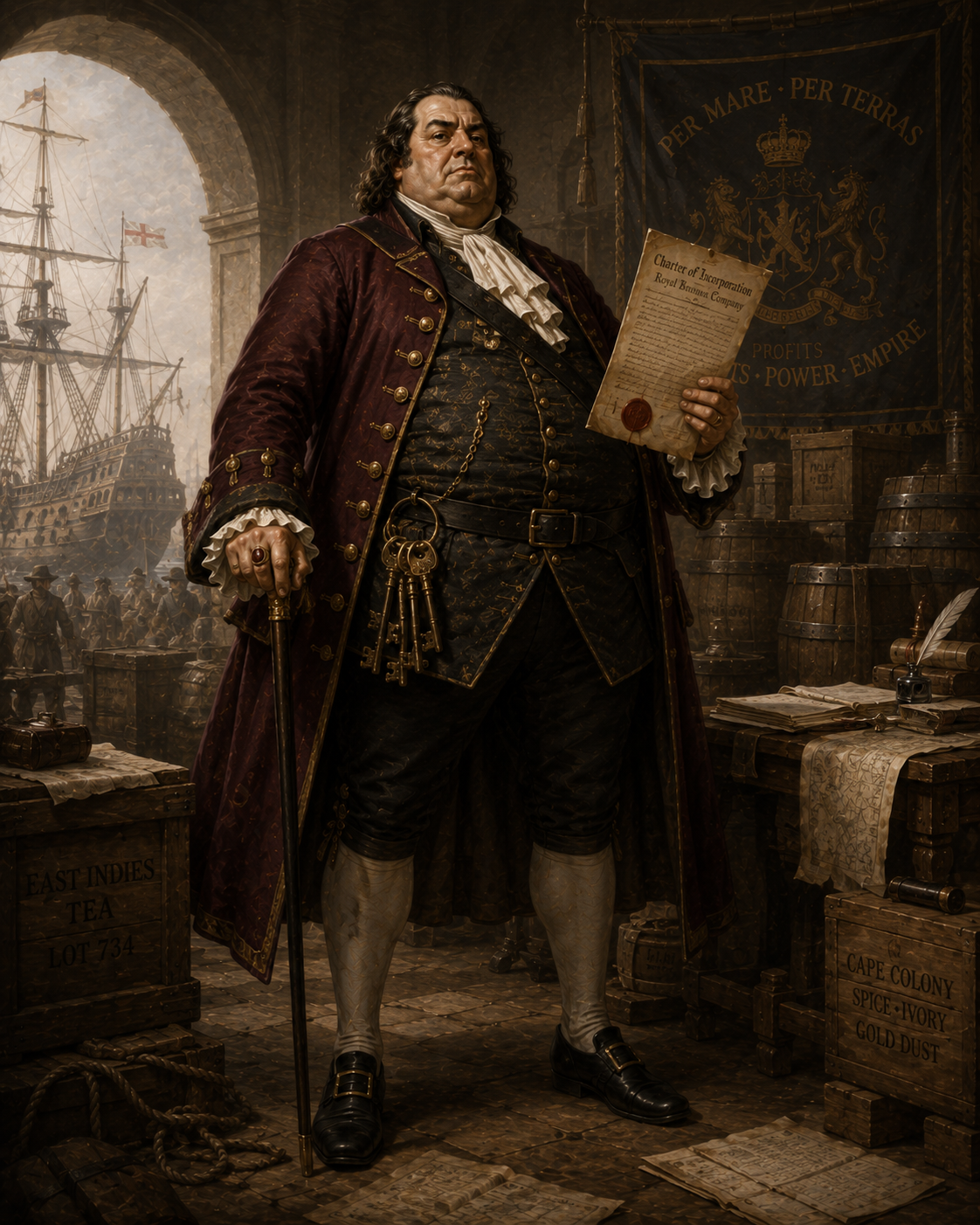
Offensive acquisition, occupation, and contiguous control
“Take the ground. Close the deal.”
The Executive turns battlefield occupation into a buying opportunity, linking aggression and ownership more tightly than the Banker.
A successful attack can advance both your territorial position and your property portfolio. The Executive rewards attacking ground you are prepared to buy.
Archetype and setting
Financiers represent banks, counting houses, investors, insurers, chartered companies, merchants, and administrators whose control of credit, property, trade, and infrastructure can rival more visibly political institutions. The Banker controls abstract value through credit, debt, collateral, and liquidity; the Executive converts capital into material systems—companies, routes, warehouses, concessions, production, and administrative control.
Leader inspirations: Banker — Alexander Hamilton and the early-modern merchant-financier tradition: money understood as credit, institutional capacity, and political power rather than mere wealth. Executive — East India Company directors, colonial company governors, and chartered-company magnates whose commercial authority could become administrative, territorial, and quasi-sovereign.
Gauntlet takes place in an eighteenth-century powder-and-parchment world of competing provinces, chartered territories, autonomous cities, commercial possessions, and independent native nations. The six factions are institutional spheres that cross political and cultural borders: methods of exercising power rather than six countries or peoples.
Take the next step