Make battle costly
Opposing Tactics can be condemned to the Graveyard instead of recycling through the Discard Pile, turning normal battle spending into permanent loss.
Inquisition · faction overview
The Inquisition condemns opposing cards to the Graveyard, then purges and purifies without mercy—stripping the opponent's resources away until there is nothing left to draw.
At the table
The Inquisition wins through attrition and denial. Even an ordinary battle can permanently thin the opponent's options, creating pressure that grows whether or not the battlefield moves quickly.
Opposing Tactics can be condemned to the Graveyard instead of recycling through the Discard Pile, turning normal battle spending into permanent loss.
Those permanent losses build Conviction, which powers the faction's harsher effects. Attrition itself becomes a source of momentum.
Purges turn Conviction into permanent removal from Assets, Hand, and other recoverable resources, making each later turn harder for the opponent to rebuild.
Signature system
Conviction is the authority the Inquisition gathers as opposing cards are permanently lost—and from certain acts it deems intolerable. It fuels the faction's harshest judgments.
Condemnation keeps battle cards from recycling; Purge spends Conviction to remove larger pieces of the opponent's engine. Together they make recovery progressively harder.
Purification is the end state of the Inquisition's campaign: strip away the opponent's recoverable deck until there is nothing left to draw.
Victory
Permanent removal and retaliation can clear a direct path through the Territories while shrinking the opponent's ability to resist.
Purify the opponent until both their Draw Pile and Discard Pile are empty. If there is nothing left to draw, the Inquisition wins.
Faction Leaders
Each Leader uses the same Conviction and Purge tools, but one turns victories into harsher judgment while the other weaponizes the opponent's failed attacks.
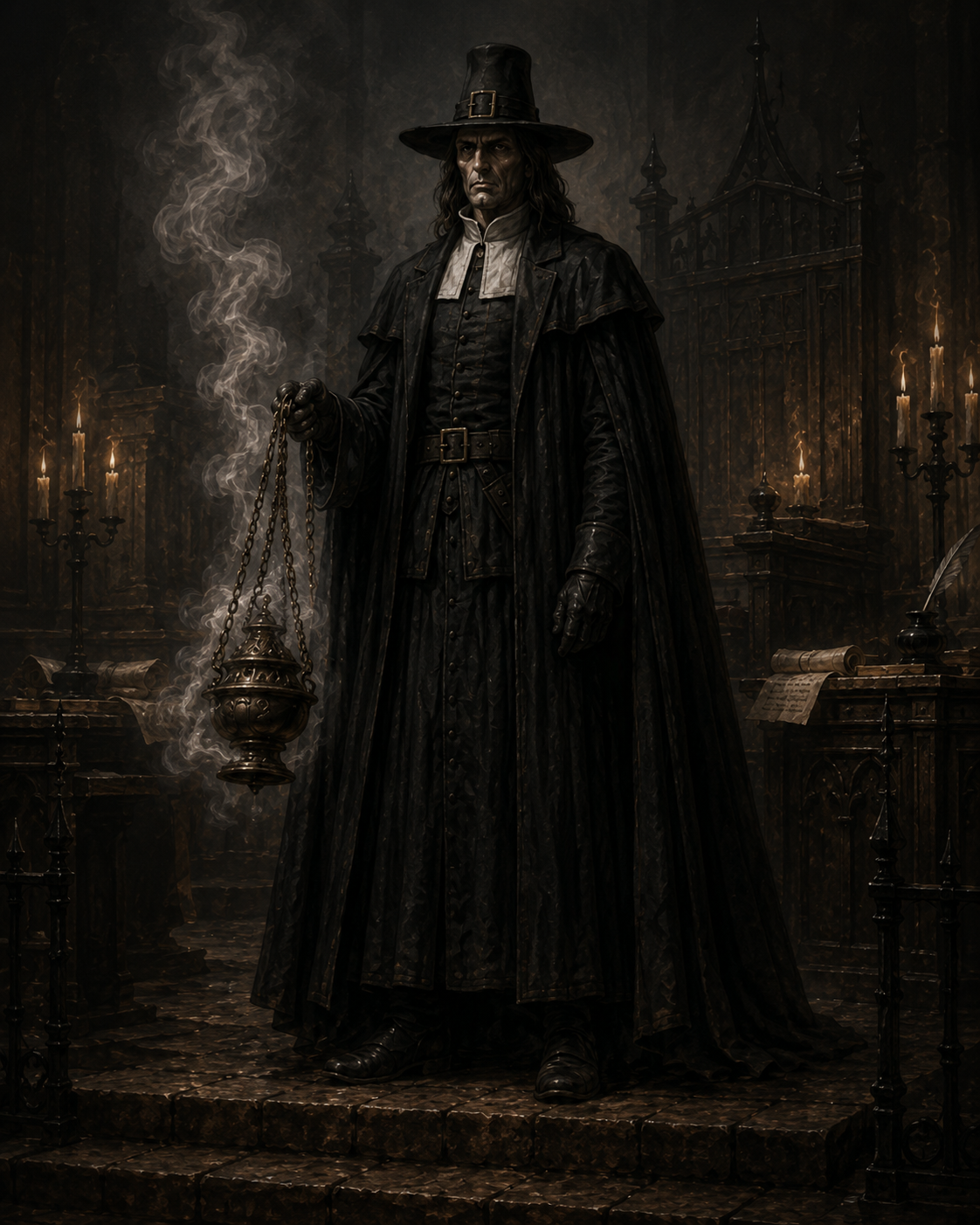
Judgment, Purge, and permanent removal
“We judge. We purge.”
The Grand Inquisitor turns battle victories into cheaper Purges, linking territorial success directly to permanent resource damage.
The Grand Inquisitor rewards choosing battles you can win, then using the victory to remove the opponent's most important recoverable resource.

Defense, retaliation, and pursuit
“You ran. I followed.”
The Witch Hunter can turn a failed enemy attack into an immediate pursuit, converting defense into counteroffense.
The Witch Hunter rewards holding enough Conviction in reserve to threaten pursuit. Opponents have to think twice before attacking a position he can defend.
Archetype and setting
The Inquisition represents a rigorist religious-legal institution concerned with doctrine, spiritual danger, investigation, judgment, and suppression. Its authority is recognized differently from one jurisdiction to another, and its claims can conflict sharply with local civil authority and native sovereignty. The Grand Inquisitor embodies tribunal and institutional judgment; the Witch Hunter carries that mission into the field as investigator, pursuer, and enforcer.
Leader inspirations: Grand Inquisitor — Tomás de Torquemada, William Bradford, Cotton Mather, Girolamo Savonarola, and the broader archetype of the severe Puritan magistrate or doctrinal judge. Witch Hunter — Matthew Hopkins and Van Helsing: the itinerant hunter of hidden supernatural corruption.
Gauntlet takes place in an eighteenth-century powder-and-parchment world of competing provinces, chartered territories, autonomous cities, commercial possessions, and independent native nations. The six factions are institutional spheres that cross political and cultural borders: methods of exercising power rather than six countries or peoples.
Take the next step