Plan multi-turn Rites
Each Rite asks you to set up and sustain a different kind of achievement. Your opponent can see what you are attempting and try to interrupt it.
Mystics · faction overview
Mystics reach into the Graveyard for forbidden power, reclaim cards thought lost, and complete Rites that unlock new abilities—until the Ritual of Ascension becomes possible.
At the table
Mystics treat cards that other factions would consider spent or lost as ingredients in a longer ritual plan. Their power grows as Rites are completed, creating a visible race between battlefield pressure and occult progress.
Each Rite asks you to set up and sustain a different kind of achievement. Your opponent can see what you are attempting and try to interrupt it.
Mystics deliberately send cards to the Graveyard, then recover or exploit cards that would normally be out of circulation.
Each completed Rite unlocks another faction ability, so the Mystics become more flexible and dangerous as their ritual work succeeds.
Signature system
Mystics can reach back into the Graveyard for cards other factions would consider gone, turning sacrifice and loss into future possibilities.
Each Rite is a public challenge that changes what the faction can do once completed. The more Rites you finish, the stranger and more powerful your options become.
Complete all three Rites and the final Ritual of Ascension comes within reach, giving the Mystics a second path to victory.
Victory
Forbidden recovery and newly unlocked powers can support a direct territorial win while your Rites force the opponent to respect a second threat.
Complete all three Rites to unlock the Ritual of Ascension, then carry the ritual through to claim victory.
Faction Leaders
Each Leader uses the same Rites and Arcane card pool, but one turns sacrifice into card flow while the other protects long-term ritual progress.

Sacrifice sequencing and card conversion
“Nothing is fixed. Everything can be transformed.”
The Alchemist replaces some deliberate sacrifices with new draws, making the Mystics' costs feel more like conversion than simple loss.
The Alchemist is the combination-focused Mystic. Sacrificing the right card can both pay a cost and keep your Hand moving, encouraging chains of effects rather than simple conservation.
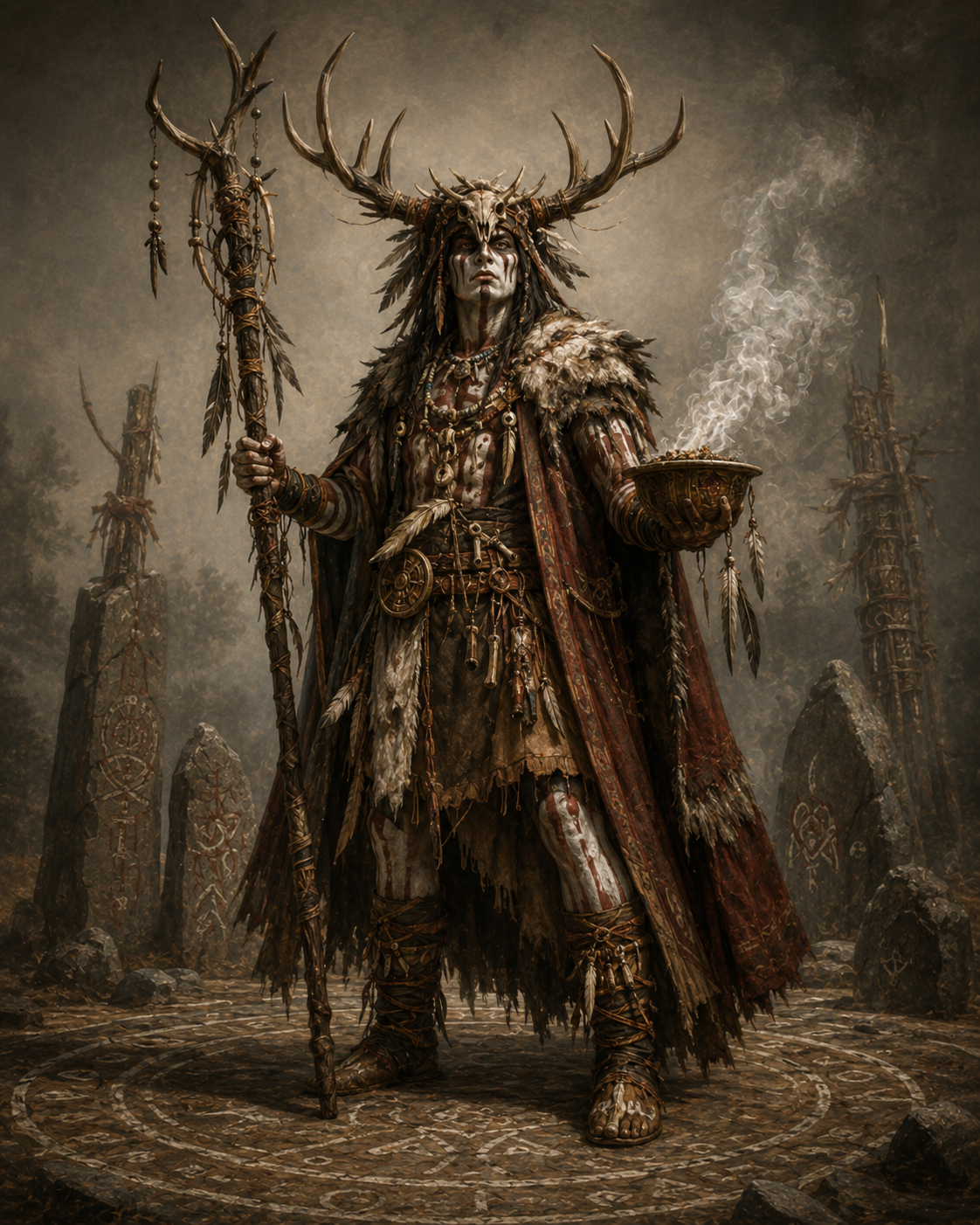
Ritual endurance and protective sacrifice
“The spirits remember what the living abandon.”
The Spirit Walker can protect ritual progress from a battle loss by sacrificing an Arcane card, making long-term Rites harder to disrupt.
The Spirit Walker is the steadier Mystic. Keeping the right Arcane card in reserve lets you take battlefield risks without surrendering all the work invested in a Rite.
Archetype and setting
Mystics encompass people and traditions that engage directly with the setting's rare and disputed supernatural phenomena. The Alchemist approaches hidden forces through experiment, instruments, formulae, and an effort to make the extraordinary reproducible; the Spirit Walker belongs to culturally rooted Indigenous ceremonial traditions in which spiritual knowledge is inherited, practiced, and understood through relationships and obligations rather than experimental theory.
Leader inspirations: Alchemist — Nicolas Flamel, Paracelsus, and John Dee: the early-modern scholar working at the unstable boundary between natural philosophy and the occult. Spirit Walker — The Spirit Walker encompasses a broad range of Indigenous spiritual archetypes, from prophetic figures such as Tenskwatawa and Neolin to the darker traditions surrounding skinwalker legends.
Gauntlet takes place in an eighteenth-century powder-and-parchment world of competing provinces, chartered territories, autonomous cities, commercial possessions, and independent native nations. The six factions are institutional spheres that cross political and cultural borders: methods of exercising power rather than six countries or peoples.
Take the next step